📌 Key Takeaways
An ant infestation begins when a colony finds food or water near your home and decides to make a move. This guide helps you spot the warning signs explains what draws ants into your space and tells you what kinds of ants you might see. It also gives ways to get rid of them. It shows you when you can handle the problem on your own and when it’s better to call a professional.
Ants are a pest that homeowners must deal with and there is a clear reason, for that. I have seen how ants can ruin kitchens. Ants slip through gaps that you may not notice and stay persistent returning whenever a food or water source remains. Understanding what draws ants and acting early can stop a lot of trouble. According to Market Data Forecast, the global ant control market was valued at USD 631.62 million in 2025 and is projected to grow from USD 657.77 million in 2026 to USD 909.94 million by 2034, registering a CAGR of 4.14% over the forecast period (2026–2034).
What Is an Ant Infestation?
An ant infestation is not merely seeing one or two ants wander across your floor. An ant infestation means that a colony has found something in your home that it wants to bring over and over again.
It usually begins with scout ants that appear first looking around. If they find food or water they leave a scent trail back to the nest so the other ants can follow. That is how a couple of ants become a steady line marching across your kitchen counter in just a few days.
Some signs of an infestation include ant trails along baseboards or countertops, dirt piles near cracks or entry points, and sometimes a musty smell if the nest has settled somewhere damp. If you notice these signs, professional ant pest control can help identify the source and address the infestation. If you spot winged ants, inside your home pay attention. That usually means the colony is old enough to start reproducing.
What Causes an Ant Infestation in Your House?
Ants do not show up for no reason. Something always pulls them in even if you cannot see it.
Food is the attractant. Crumbs left on the counter, a spilled drink, a bag of sugar-ants notice all of it quickly. Water matters as much. A leaky pipe, a damp corner in the basement or condensation on a window can be enough to keep a colony interested.
Weather plays a part too. Heavy rain floods nests, so ants move indoors seeking dry ground. Extreme heat pushes colonies toward cooler spots inside walls or under floors.
Then there’s the house itself. Small cracks in the foundation, gaps around windows and doors, or unsealed utility lines all give ants an entrance. Most homes have at least one of these gaps without anyone noticing.
A few other things that quietly invite ants in:
- Bushes or tree branches touching the house give ants a path to your siding
- Firewood stacked against an outside wall does the same thing
- Pet food left out overnight is basically free food for them
Common Types of Ants Found in Homes
Not all ants act the same way so knowing which type you are dealing with matters when it comes to treatment.
Odorous house ants are the ones most people come across. They are small and dark brown or black. When you crush them they give off a smell that’s like rotten coconut.
Carpenter ants are bigger. Tunnel through wood to build their nests. They do not eat the wood as termites do. Enough tunneling over time can still weaken it.
Pavement ants usually nest under sidewalks, driveways or slabs. You will often notice mounds of dirt near cracks in the concrete.
Pharaoh ants are tiny and pale. They are notoriously hard to get rid of. If you disturb the colony it can split into smaller nests instead of dying off.
Fire ants build mounds outside and sting hard, so they are mostly an outdoor issue, but they will wander inside through an open door if given the chance.
How to Get Rid of an Ant Infestation
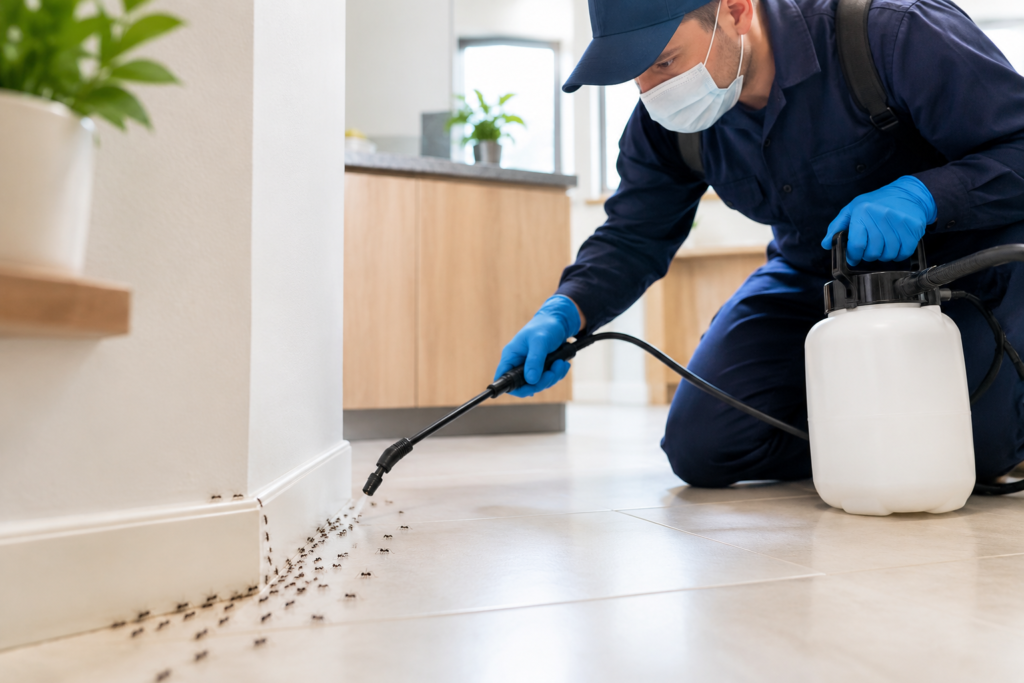
If you are trying to figure out how to get rid of ants, start by identifying what is attracting them rather than simply spraying the ones you can see, and consider contacting a professional pest control company for help with persistent infestations.
Clean up food debris. Keep dry goods sealed up tight. It sounds basic. It is honestly the biggest factor, in whether ants stick around. Fix any moisture problems. A leaky faucet or a damp corner is often all it takes to keep a colony interested.
Sealing entry points helps a lot. A little caulk around windows, doors and baseboards closes off the paths that ants use to get in. For trails, bait usually works better than spray. Worker ants carry the bait back to the nest, which can take out the queen along with it. Spray only kills the ants that’re in front of you and leaves the rest of the colony untouched.
Finding the Ant Nest
Locating the nest makes a real difference in how well treatment works. Outside look for soil mounds, sawdust near wood or ants disappearing into cracks in pavement or siding. Inside ant nests tend to hide in wall cavities under flooring or behind appliances that stay warm.
If you search for a while. Still can’t find the ant nest, that usually shows that the infestation is bigger than a simple fix can handle.
DIY Ant Control vs. Professional Ant Control
DIY methods work fine for small contained problems. Bait, caulk and basic cleaning handle cases without needing to call anyone.
Indoor ant control gets harder with certain species. Carpenter ants often have than one nest hidden inside walls, which is not something you can fix in an afternoon. Pharaoh ants are even trickier because disturbing them the way can spread the colony instead of getting rid of it.
If you have already tried baiting and sealing gaps and ants keep coming within a week or two that usually shows that the colony is bigger than what surface treatment can fix.
Why Choose Professional Ant Infestation Treatment?
Professional ant control comes with an advantages that you do not get from DIY. A trained ant exterminator can identify the species first which matters because different ants need different approaches.
Professionals also have access to specialized treatment products and tools that may not be available in stores, along with the experience to locate ant nests hidden inside walls or beneath slabs. Rice’s Termite & Pest Control can provide targeted treatment and, where applicable, follow-up service if ants return within the covered period.
For repeat infestations professional ant pest control usually ends up cheaper in the long run than buying DIY products over and over for short‑term results.
FAQs
What attracts ants to a house?
Food scraps, standing moisture and easy entry points like cracks or gaps are the things that draw ants in. Sweet or greasy food left out tends to attract ants
How can I find a nest?
Follow the trail. Ants usually move in a consistent line back to the ant nest whether that nest is outside in the soil or inside a wall or damp corner.
How long does it take to get rid of an infestation?
With bait, it usually takes one to two weeks to see a drop in ant activity because it takes time for the bait to reach the queen. Professional treatment can move faster.
How can I prevent ants from coming?
Keep food sealed up fix leaks trim plants away from the house and seal cracks around windows and the foundation. Staying consistent with ant prevention matters more than doing it once and forgetting about it.
Why choose Rices Termite & Pest Control for pest control?
Rices Termite & Pest Control sends trained technicians who correctly identify the species and target the ant nest, not only the ants you can see. This usually results in a lasting ant infestation treatment than you can achieve on your own.