📌 Key Takeaways
Tick exterminator cost usually ranges from $100 to $500 for a yard treatment. Seasonal plans often cost less for each visit than if you book treatments separately. This guide explains prices from 2026 what makes the number go up or down and how to check quotes properly.
Tick control pricing depends on specific factors, not a set rate. The size of the property the type of ticks the method used for treatment and the location all affect the cost, which’s why two quotes, for yards that look similar can still be very different.
Average Cost Breakdown: What Homeowners Usually Pay
Tick exterminator cost usually falls between $100 and $500 for a yard treatment. The national average is $200. Tick exterminator cost can vary widely. The reason becomes clear when you think about property size and treatment type.
A quarter‑acre yard is on the end costing between $100 and $200 for one visit. A full acre costs $150 to $350.Larger properties, wooded ones over an acre often cost $300 to $500 or more and sometimes the price is, per acre instead of a flat fee.
Seasonal tick control cost works differently. Monthly visits during active tick season typically run $40 to $80 per visit when bundled into a season-long plan, compared to $100 to $300 if you booked each visit individually. Bundling genuinely saves money here.
A quick breakdown of common pricing options:
- One-time treatment: $100 to $500, best for an isolated tick sighting or a pre-event cleanup
- Seasonal plan (4 to 6 visits): $400 to $900 per year, the more common recommendation for ongoing protection
- Monthly plan pricing: $40 to $80 per visit within a bundled season
Key Factors That Affect Price
A handful of variables explain most of the spread in tick treatment per visit pricing.
A few things that move the price up or down:
- Property size and terrain: Bigger yards need more product and labor. Wooded lots with dense underbrush also cost more than a flat, mowed lawn.
- Tick species and infestation severity: Deer ticks, the main Lyme disease carrier in much of the Northeast, sometimes need a more aggressive approach than lone star ticks common in the South. A heavier infestation also means more product and possibly a follow-up visit.
- Treatment method: Liquid barrier sprays, granular treatments, and tick tubes all carry different price points. Granular treatments tend to run slightly cheaper than liquid sprays but need moisture to activate.
- Region: Professional tick control price varies by area too. High-risk states in the Northeast and Upper Midwest, including areas like Delmarva, tend to see slightly higher average pricing given tick pressure in those regions.
DIY vs. Professional Treatment: Cost Comparison and Trade-Offs
DIY tick yard treatment costs less upfront. A bag of granular product or a bottle of concentrate runs maybe $30 to $80 at a hardware store, covering a similar area to what a professional visit would treat. That gap in the cost to treat ticks yourself versus hiring it out is real. That gap is not the whole story.
The trade-off shows up in effectiveness and safety.Commercial‑grade products used by applicators are often more powerful and applied more accurately, than consumer versions. Missing a treatment zone means the tick population simply persists in that zone and repopulates the rest of the yard within weeks.
A few things professionals bring that DIY doesn’t:
- Commercial-grade products applied more precisely
- Liability insurance in case of an issue
- Knowledge of label requirements for pet and child safety windows
- Consistent coverage across every high-risk zone, not just the visible areas
Typical Treatment Process and What to Expect from an Exterminator
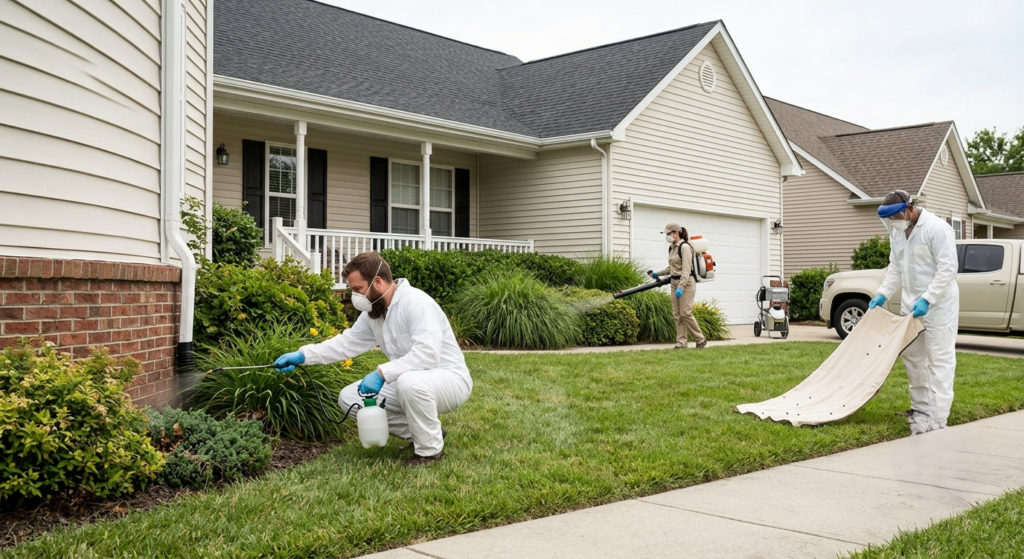
Most professional visits follow a similar sequence, whether it’s a one-time job or the first visit of a seasonal plan.
A technician typically starts with a property walk-through, identifying high-risk zones like wooded borders, tall grass, and leaf piles. Knowing how to get rid of ticks starts with targeting the yard perimeter and shaded areas, rather than blanket-spraying the entire lawn, since ticks typically avoid direct sun and concentrate near edges. Most liquid barrier treatments last three to four weeks, while granular applications can last four to six weeks depending on rainfall.
A few things worth expecting from a legitimate provider:
- A property assessment before quoting a final price
- Clear explanation of which areas will and won’t be treated
- Posted safety signage after application
- A stated re-entry time for pets and children
Ways to Lower Costs Without Sacrificing Effectiveness
Cutting costs does not have to mean doing a job.
Putting treatments into a seasonal plan usually saves money compared to paying for each visit separately sometimes saving, between 30 to 50 percent over an entire season. Doing lawn pest control tasks like mowing regularly cleaning up leaves and cutting back bushes near the edges of the yard makes the treatments much more effective and requires less product and labor. The U.S. pest control industry reached approximately $26.1 billion in 2025, growing 2.7% during the year, according to IBIS World. It is also worth asking about service bundles, as combining mosquito and tick control may help reduce the overall cost.
A few ways to keep costs down:
- Choose a seasonal plan over paying per visit
- Keep grass mowed short and clear leaf litter regularly
- Trim brush and overgrowth along property edges
- Ask about bundled mosquito and tick service discounts
When a Higher-Cost Option May Be Worth It
Not every situation calls for the cheapest available quote.
Integrated pest management programs, which combine perimeter spraying, tick tubes, and habitat modification, typically cost more, often $400 to $600 per season, but offer more comprehensive protection than a single treatment method alone. For households with a history of tick-borne disease exposure, or properties bordering woods with confirmed high tick activity, that extra cost buys a meaningfully lower risk.
A few situations where paying more usually makes sense:
- A property bordering woods with known high tick activity
- A household with a prior tick-borne illness
- Neighborhoods running coordinated, community-wide treatment programs
Community-wide tick control programs, where neighborhoods coordinate treatment schedules, sometimes cost more per household but reduce reinfestation from untreated neighboring properties.
How to Get Accurate Quotes and Compare Estimates
Getting quotes over the phone without a property visit often gives numbers that’re not accurate, either too low to be realistic or too high to cover unknowns.
Ask for a written quote that lists the footage covered the treatment method and the number of visits included. Comparing three quotes side by side of taking the first number is a useful way to spot an outlier, high or low. A provider such, as Rices Termite & Pest Control located in Salisbury, Maryland and serving the Delmarva region normally walks the property before quoting than just pricing over the phone.
Conclusion
The cost of a tick exterminator isn’t random even though it may seem that way when you look at companies online. The size of the property the land features, the way the treatment is done and the location all affect the price in a way once you understand what is causing the change. A plan that covers the season is usually better than several one-time visits when it comes to both money and stopping ticks. Getting an in-person estimate is always better, than trying to figure it out over the phone.
FAQs
How much does a single tick yard treatment usually cost?
A one-time yard treatment typically costs $100 to $500, with most homeowners paying around $150 to $200 for an average-sized quarter to half-acre property.
What is included in a seasonal tick control plan?
Seasonal plans generally include 4 to 8 visits spaced throughout active tick season, targeting yard perimeters and high-risk zones, often at a lower per-visit rate than booking individual treatments.
Are professional tick treatments safe for pets and children?
Yes, when applied correctly and paired with the stated re-entry window, typically a few hours after application. Reputable providers post signage and clearly communicate safety timing before leaving the property.
Can I treat my yard myself for less money?
Yes, DIY products cost less upfront, generally $30 to $80 per application, though they’re often less concentrated than professional-grade options and require more careful, thorough application to work as effectively.
How often should I have my yard treated for ticks?
Most properties benefit from treatment every 3 to 6 weeks during active tick season, which typically runs from early spring through fall depending on regional climate.
Do exterminators guarantee tick elimination?
Most reputable companies guarantee reduced tick activity rather than complete elimination, since ticks can migrate in from neighboring untreated properties regardless of how thoroughly one yard gets treated. Rice’s Termite & Pest Control, serving Salisbury, MD and the wider Delmarva area, offers a return guarantee between scheduled visits if pest activity shows up again before the next treatment.