


📌 Key Takeaways
When it comes to getting a mouse out of a car, there is a lot to know before you start. Finding mouse droppings on your dashboard or chewed wiring under the hood is the kind of discovery that makes your stomach drop. Mice in a car aren’t rare anymore, and it’s not just a rural problem either. Rodents have figured out that engine bays and cabin air systems make decent shelter, especially when a vehicle sits parked for days at a time. If you’re dealing with this right now, here’s the good news: there’s a clear process for removal and cleanup, plus habits that’ll keep rodents from moving back in.
Why Mice End Up in Cars
Cars offer warmth, shelter from predators, and decent nesting material thanks to cabin insulation and air filters. Engine bays stay warm for hours after a drive, making them an ideal winter hideout for mice. Parked cars in garages, driveways near shrubs, or vehicles left sitting for long stretches tend to get hit the hardest. Food wrappers, pet food stashed in the trunk, and even crumbs from a drive-through meal can attract rodents. If you notice signs of rodent activity around your vehicle, professional rodent pest control can help identify the source of the infestation, prevent further damage, and protect your car from unwanted visitors.
This isn’t some minor nuisance either. According to the RAC, rodent-related breakdowns rose 55% over a five-year span, climbing from 196 incidents in the first 11 months of 2018 to 303 in the same period in 2023. That’s a real jump, and it lines up with what mechanics have been saying for years now: mice chewing through wiring and hoses is becoming a genuine cause of vehicle failures, not just a rare fluke.
Signs You Have Mice in Your Car
Before you start tearing the car apart, it helps to confirm what you’re actually dealing with. Common signs include:
If you also notice similar activity around your property, check for signs that you could have mice at home, as an infestation in your garage or living space may be contributing to repeated rodent problems in your vehicle.
- A musty or urine-like smell coming from the vents, especially when the heater or AC first kicks on.
- Small droppings on the floor mats, seats, or under the hood near the air filter housing.
- Shredded paper, fabric, or insulation bunched up in corners of the engine bay or under the seats.
- Scratching or scurrying sounds, particularly when the car has been sitting for a while.
- Chewed wires, hoses, or upholstery, sometimes only visible once you pop the hood.
- Reduced airflow from the vents, which can mean a nest is blocking the cabin air filter.
- Notice even two or three of these? It’s worth doing a full inspection instead of waiting for things to get worse.
- Step-by-Step: How to Remove Mice From Your Car
1. Air It Out First
Before you touch anything, open the hood, doors, and trunk and let the car air out. This matters more than people think. Dried rodent droppings and urine can carry pathogens that become airborne once disturbed. The CDC recommends airing out a vehicle for 20 minutes before cleaning or even starting it if you suspect a rodent problem. King County, Washington, gives the same advice, recommending 20 minutes of airing out the vehicle before any inspection or cleanup begins. Skipping this step and immediately vacuuming or wiping down a nest is one of the more common mistakes people make, and honestly, an understandable one when you just want the smell gone.
2. Check the Hood and Engine Bay
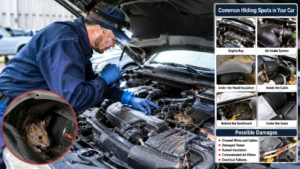
Mice love engine compartments because they’re warm, dry, and full of small gaps to hide in. Look around the air intake, near the battery, along the firewall, and inside any plastic housings that have openings. Nesting material often shows up wedged near the cabin air intake at the base of the windshield. If you spot chewed wires, don’t start the car until it’s been inspected. Damaged wiring can cause electrical shorts, or worse, fires.
3. Inspect the Cabin Air Filter and Vents
The cabin air filter is one of the most common nesting spots, mostly because it’s accessible, insulated, and almost never checked. Pop open the glovebox or filter housing (check your owner’s manual for the exact location) and look for shredded material, droppings, or a blocked filter. A clogged or nested filter is usually the reason behind that sudden musty smell when you turn on the fan.
4. Search the Trunk and Under the Seats
Trunks with spare tire wells, tool compartments, or stored boxes are prime real estate for a nest. Pull out any removable panels and check underneath. Under the seats, look at the seat tracks and factory storage pockets. Mice don’t need much room, so even a narrow gap under a seat rail can hide a surprising amount of nesting material.
5. Clean Droppings and Nesting Material Safely
Never sweep or vacuum dry droppings. Doing so stirs up dust that’s unsafe to breathe. Instead, spray droppings and nesting material with a disinfectant or a diluted bleach solution, let it sit for several minutes, then wipe it up with disposable paper towels while wearing gloves. Double-bag the waste and toss it in an outdoor trash bin. Once the area’s clear of visible debris, go over surfaces again with disinfectant and let everything air dry before closing up the car.
6. Replace the Cabin Air Filter
If the filter was nested in or chewed through, replace it instead of trying to clean it. These filters are cheap, and swapping one yourself usually takes less than fifteen minutes on most vehicles. A fresh filter also clears up the lingering odor that cleaning alone sometimes can’t fix.
7. Have a Mechanic Check for Wire Damage
Even if you don’t spot obvious chew marks, it’s worth having a mechanic take a look once you’ve confirmed mice were in the car. Rodents often go after wiring insulation because many newer vehicles use soy-based materials in it, which apparently makes it tastier to chew on than older petroleum-based coatings (who knew mice had preferences?). If you’re wondering how to get rid of mice, start by having the vehicle inspected, removing any food sources, and cleaning areas where rodents may have nested. Addressing the infestation early can help prevent further wiring damage and avoid costly repairs down the road.
Preventing Mice From Coming Back
Once you’ve cleaned the car out, the real goal is making sure it doesn’t happen again. A few habits make a real difference:
Don’t store food in the car. This includes pet food, snacks, and even empty wrappers that still carry a scent.
Park away from vegetation. Tall grass, woodpiles, and dense shrubs near a driveway give mice easy access to your vehicle.
Use rodent repellent products. Peppermint oil pouches, ultrasonic repellers, or commercial rodent tape placed around the engine bay can discourage nesting, though none of these work perfectly on their own.
Run the car regularly. Vehicles that sit idle for long stretches are far more attractive to rodents than ones driven often, since the noise and vibration disrupt nesting.
Seal garage entry points. If your car’s stored in a garage, check for gaps around doors and foundation walls where mice could be getting in before they ever reach the vehicle.
Keep the engine bay clean. Leaves, debris, and loose insulation give mice material to build with, so clearing this out now and then removes some of the temptation.
What to Do If the Problem Keeps Happening
If you’ve cleaned the car, replaced the filter, and mice still keep showing up, it’s probably time to treat this as a broader pest control issue rather than just a car problem. That might mean setting traps in the garage, checking for nearby nests, or contacting a professional pest control service to address a larger infestation around your home or parking area. Repeated rodent damage to a single vehicle may indicate an active nest nearby rather than a random visitor. Rice’s Termite & Pest Control, featured on Delmarva’s Best Pest Control, provides professional mice and rodent control services, including treatments to eliminate existing infestations and help prevent rodents from entering your property. If you’re dealing with recurring rodent activity, their team can help identify the problem and recommend suitable solutions to protect your home, garage, and vehicles.
Conclusion
Mice in a car are more than an unpleasant surprise. They’re a real mechanical risk, and one that’s becoming increasingly concerning for vehicle owners. Rodents can damage wiring, cabin filters, and insulation, potentially leading to expensive repairs. The fix starts with airing out the vehicle, inspecting the hood, trunk, cabin filter, and vents, cleaning affected areas properly, and getting any chewed wiring checked before driving. After that, prevention mostly comes down to removing food sources, parking strategically, and avoiding long periods without using the vehicle.
If you notice repeated rodent activity around your vehicle or garage, professional pest management can help address the problem at its source. Rice’s Termite & Pest Control, through Delmarva’s Best Pest Control services, offers mice and rodent control services to help prevent rodents from entering properties and treat existing infestations. Homeowners looking for the best pest control services can benefit from professional inspections and targeted rodent control solutions. Acting early can help protect your vehicle, home and property from further rodent damage.
FAQ
Is it safe to drive a car that had mice in it?
It’s safe once you’ve aired it out, cleaned droppings properly, and had any chewed wiring checked by a mechanic. Driving right after discovering a nest, without airing it out or checking for damage first, isn’t a great idea.
How do I know if mice are still in my car?
Fresh droppings, new nesting material, or a strong odor returning after cleaning are good signs mice are still around. Setting a few snap traps inside the car overnight (with the car in a garage or enclosed space) can help confirm whether they’re still present.
Can mice in a car cause a fire?
Yes. If they chew through wiring insulation and cause a short circuit, it can potentially spark a fire. That’s exactly why checking the engine bay and having a mechanic inspect any suspected damage matters so much.
Do mothballs or dryer sheets keep mice out of cars?
Plenty of people use these as a deterrent, and some report success, but they’re not a guaranteed fix. Combining them with other prevention habits, like keeping food out of the car and sealing garage entry points, works better than relying on scent deterrents alone.
How often should I check my car for rodent activity?
If your car sits unused for more than a few days at a time, or you live somewhere with known rodent activity, a quick visual check of the engine bay and cabin air intake every couple of weeks is a reasonable habit to pick up.
