Don’t let their tiny size fool you!
One day, your home is clear, and the next, it feels like an ant colony has moved into your kitchen overnight. Dealing with these tiny intruders is frustrating, but getting your ant pest control right doesn’t have to be a guessing game.
The trick is knowing which tool to grab.
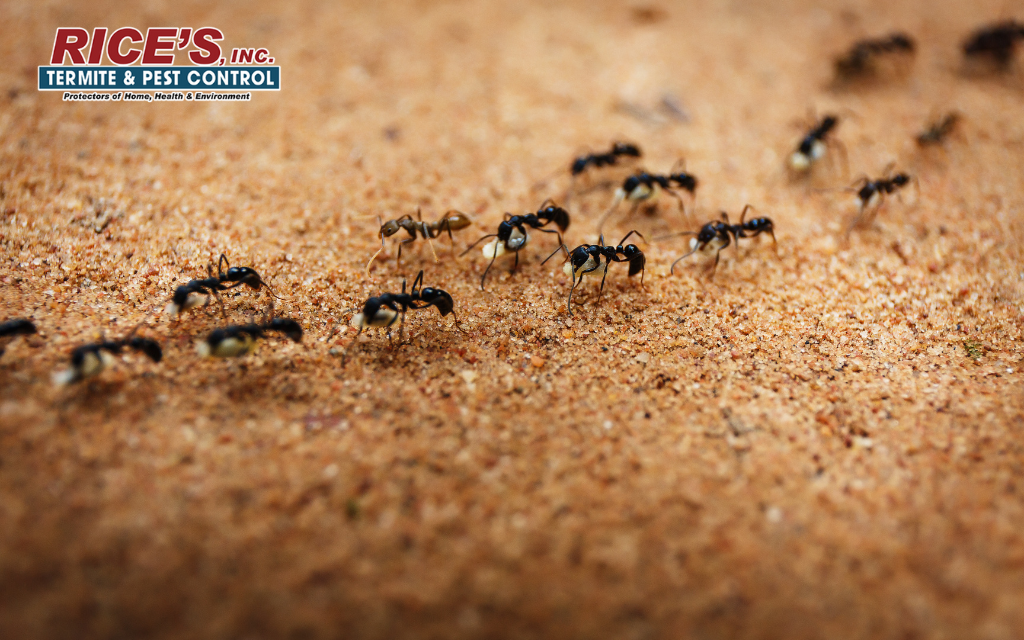
If you see a trail heading for the honey jar, baits are your best friend. Ants carry the bait back to the nest, taking out the colony at its source. However, if you’re spotting them emerging from specific cracks or crevices, a contact spray can provide immediate results.
At Rice’s Termite & Pest Control, we’ll explore exactly when to bait and when to spray so you can reclaim your space efficiently.
Don’t let a small DIY project turn into a giant headache.
With our experts on your side, you can show those ants the door for good. Let’s read on to know more!
What is Ant Bait and Where to Use It
Dealing with an ant invasion can feel like a losing game of hide-and-seek, but bait is an effective way to let the ants do the work for you.
Essentially, bait appeals to their instincts.
Because ants are constantly looking for high-calorie, sugary snacks to fuel their colonies, most baits are sweetly flavored to be more appealing than stray crumbs in your kitchen.
The real work happens after they find it. Instead of dying on the spot, the hunter ants take the bait back home and distribute it to the rest of the colony, including the queen.
Because it penetrates invisible areas, it is a very effective ant treatment. This could be deep inside wall voids, under heavy appliances, and tucked away in tiny floorboard cracks.
You don’t have to tear apart your home to get the best results.
Simply place liquid or granular baits along the trails where you see the most activity. It’s a low-effort, high-reward strategy that addresses the root cause of the problem rather than just the ants on your countertop.
Pros and Cons of Using Ant Bait
As with any product, there are several advantages and disadvantages to using them. Use these as a guide to determine which product is best for your needs.
Pros
- Easy Application: Baits attract ants, so all you have to do is open the bait container, place it, and wait! The container’s small size allows it to be conveniently placed in a variety of locations.
- Bulk Elimination: Liquid and granular ant baits allow you to eliminate a large number of ants at once. Any ant that eats enough of the bait will die. Ants will also share the bait, allowing you to eliminate both visible and hidden ants.
- No mess or residue: Ant bait stations are completely self-contained. Except for bait granules, you never have to worry about cleaning up dust or residue, which contact killers leave behind.
- For Use in Homes with Kids and Pets: While it is always best to place any ant killer out of reach of children and pets, ant bait stations are safe for use in homes with kids and pets when used as directed.
- Makes Ants Do the Hard Work: It may appear that only one or a few ants are removing the bait from where you placed it. However, once the bait is delivered to the colony, it is distributed among many ants, allowing you to eliminate a large number of them at once without having to hunt them all down.
Cons
- The baiting method takes time: This can take up to two weeks. It could be several days before the ants decide to consume the bait. For the best results, keep bait on hand at all times, as eliminating a large colony may require several applications.
- Must Consistently Monitor Baits: For maximum effectiveness, ants should have access to a constant supply of bait. To keep ant populations under control and prevent them from recovering, baits must be monitored and replaced when they become low or empty.
What Are Contact Killers and Where to Use Them
Dealing with an ant invasion can seem like an endless battle, but understanding how your products work can make a big difference.
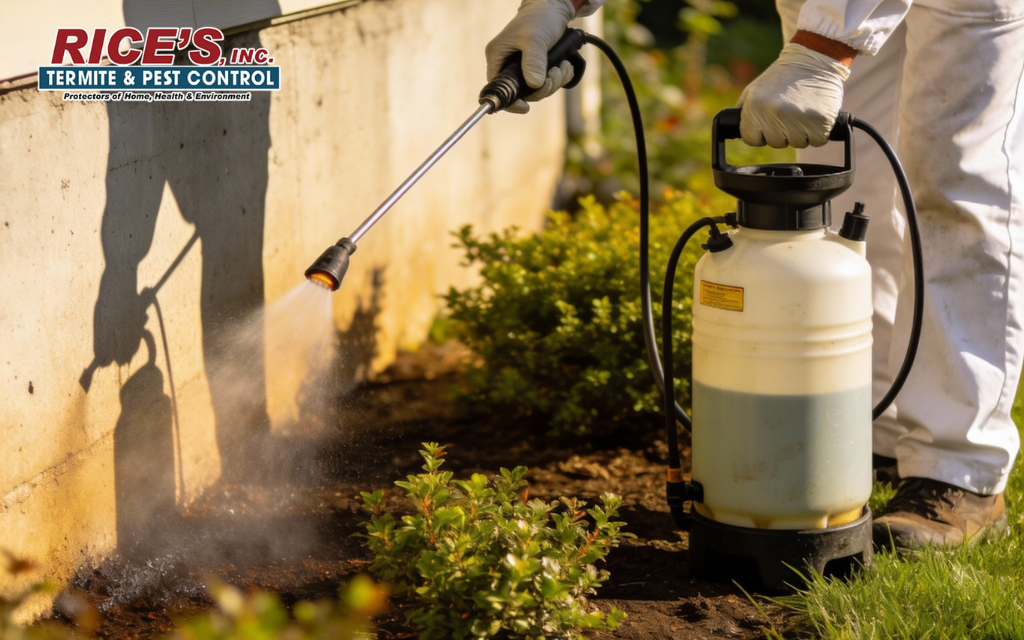
The majority of ant sprays, dusts, and granules kill on contact. This means that the active ingredients poison the ants as soon as they come into contact with them.
They’re ideal for getting immediate results or forming a protective barrier around your home to keep pests out.
When applying an ant treatment, precision is essential.
For dust and granules, sprinkle them where you’ve seen the most action, such as flower beds, lawn edges, or tiny cracks in the pavement. Once an ant crawls over them, the game is over.
If you use a spray to control ants, don’t just mist the air. To ensure full coverage, spray the ants directly from a few inches away.
These products are perfect for treating visible mounds or stopping a trail in its tracks. Just remember: for these to be effective, the ants have to physically come into contact with the product.
It’s all about putting the solution exactly where the problem is!
Pros and Cons of Using Contact Killers
Use the pros and cons below to weigh your options and choose whether a contact killer is the best solution for your home and property.
Pros
- Indoor and Outdoor Use: Contact killers are strong enough to be used indoors and outdoors. Most can fit into small spaces where ants enter, and they can be used in a variety of settings around the home and property.
- Weather Resistant: Contact killers offer long-lasting, dependable protection even when used outside in the elements. Most granules and dusts offer several weeks of protection, whereas most sprays must be applied directly to ants.
- Instant Results: Can’t wait? Contact ant killers produce immediate results. Simply place or spray them on your target, and ants will die.
- Provides Residual Protection: This type of ant killer doesn’t have to be applied many times. Even the residual particles left over can be enough to eliminate more ants.
- Sprays contain enough liquid: each bottle can cover a large area, and they make it convenient to kill ants because you can easily carry them around with you as you look for more ants to eliminate. Granules and ant dust can be placed around the perimeter of a home and in a variety of other areas to provide general protection.
Cons
- Not for use around children or pets: All contact killers contain poisons. To ensure your family’s safety, keep these ant killers away from areas where children and pets play. It’s also worth noting that there may be residual poisons after application.
- Cleanup Required: Contact killers are typically messier and need to be cleaned up after usage, in contrast to baits. Particularly in the kitchen or near food surfaces, sprays leave behind potentially hazardous residual liquids. Dust and granules should be properly disposed of in a trash can.
- Only Kills Ants It Touches: Baits kill both visible and invisible ants, whereas contact killers only kill those that come into direct contact with them. To be effective, you may need to place dust and granules in multiple locations or use the spray can to search a large area.
- Repeat Applications May Be Necessary: Because contact killers only target ants outside the colony, multiple applications may be required to significantly reduce their populations. Monitor the infestation on a daily basis to ensure that you are removing as many ants as possible.
How to Choose the Best Option for You
You should ask yourself several questions before deciding on the best option for you.
These questions will help you determine the most effective way to combat ants while also taking safety precautions around your home to protect you and your family.
Are You Seeing Swarms of Ants or Just a Few?
If you’re experiencing a massive influx of ants indoors, outdoors, or both, ant baits can help stop the colony.
It may take several weeks, but you can be confident that it will eliminate a significant portion of their population. Are you one of the fortunate few who see only a few ants around the home or yard?
Assuming you do not have a full-blown infestation, use a contact killer. Keep an eye out for increased sightings of these pests so you can remove them before they swarm.
Do You Need Immediate Results?
If you can’t stand having ants around for another second, get out your sprays, granules, or dust contact killers.
These potent ant killers will kill ants in their tracks.
If you have the time, you can use baits to have a greater impact on the ant population and catch ants you haven’t seen before.
Does Your Home Have Kids or Pets?
Pets and children are among the world’s most inquisitive animals, and they won’t think twice about tasting or sniffing whatever they come across.
This also applies to any leftover poisons or bait containers.
Because the containers may be kept out of reach, ant baits are the safest choice for households with children and pets.
Final Thought
Choosing the right ant pest control comes down to one question.
Do you want them gone now, or gone for good?
If you have the patience to play the long game, ant bait is your best bet. It relies on the ants’ own instincts to carry the solution back to the queen, wiping out the colony at its source. It’s low-effort, mess-free, and gets where sprays can’t reach.
However, if you need immediate results to stop a trail in its tracks, a contact killer is the way to go. Sprays and granules provide an instant fix and create a sturdy barrier around your home’s perimeter to block new intruders.
The most effective ant treatment often uses both baits for the hidden nests and contact killers for the ones you can see.
Rice’s Termite & Pest Control helps you choose the right product for your specific problem. You can stop the invasion and keep your home ant-free.
Frequently Asked Questions
1. How long does it take for ant bait to work?
Unlike sprays, which work instantly, an ant treatment with bait requires patience. It usually takes a few days to two weeks to notice a significant drop in activity. This delay is intentional, as it gives foraging ants enough time to return to the colony and share the bait with the queen.
2. Can I use contact sprays and baits at the same time?
You can, but you need to be strategic. Never spray a contact killer directly on your bait stations or the ants approaching them. If you kill the ants before they can carry the bait home, your ant pest control efforts will fail to reach the nest. Sprays and baits can be used as barriers and on active indoor trails, respectively.
3. Why are ants still appearing after I used a contact killer?
Only the ants you see are eliminated by contact killers. The queen will just keep producing additional workers to replace the ones you sprayed if the colony is buried deep below or concealed inside a wall. In order to get to the source of a persistent infestation, you probably need to use baits.
4. Is ant bait safer for homes with pets and children?
In general, yes. The majority of ant treatment bait stations are self-contained, protecting the active components from curious fingers and paws. Many families choose baits because contact killers, particularly dusts and sprays, leave a residue on surfaces that are easier to touch or breathe.