Summary
Wondering what a flea looks like? This guide explains how to identify fleas, recognize the signs of an infestation, distinguish fleas from other pests, and understand the different stages of their life cycle. You’ll also learn where fleas hide, how to get rid of them effectively, and when to contact the best pest control company for professional flea treatment.
If you’ve noticed a tiny, dark insect jumping through your pet’s fur or across your carpet, you may be wondering whether it’s a flea. Because fleas are so small and move quickly, they’re often mistaken for dirt, ticks, or even bed bugs. Learning the differences through Bed Bug Identification and Tick Identification can help you identify the pest correctly and choose the right treatment.
So, what does a flea look like? Adult fleas are tiny, wingless insects with flattened, reddish-brown bodies and powerful hind legs that allow them to jump remarkable distances. Recognizing their appearance, understanding the common signs of an infestation, and knowing the different flea types can help you detect the problem early and protect both your home and your pets before it becomes more difficult to control.
What Does a Flea Look Like?
Small. Like, genuinely tiny – about the size of a poppy seed, somewhere between 1/16 and 1/8 of an inch depending on the flea. Reddish-brown, shiny almost, and flattened side to side instead of top to bottom.
Their flattened body allows them to move easily through animal fur.
No wings. Zero. If it’s flying, it’s not a flea; it’s something else entirely, and you have a different bug problem now.
Six legs. The back pair is bigger, thicker, basically loaded like a spring. Their powerful hind legs allow them to jump more than 100 times their body length.
Fleas do not fly. Instead, they crawl and use their powerful hind legs to jump quickly between hosts.
Fleas Different Types You Should Know
There’s more than one kind of flea, though, to be fair, they mostly look the same.
Cat fleas cause the vast majority of infestations in the US. Here’s the annoying twist – you don’t even need a cat. Cat fleas aren’t picky eaters. Dogs, humans, rabbits, whatever’s warm and walking by works fine for them.
Dog fleas exist, technically, but they’re rarer than you’d guess from the name and nearly impossible to tell apart from cat fleas without magnification. Human fleas and rodent fleas show up sometimes too, usually after a mouse problem’s been sitting around unaddressed for a while.
Most flea species look very similar and usually require magnification for accurate identification.
What Do Cat Fleas Look Like?
Same body plan as any other flea. Oval, reddish-brown, flat, fast, annoying. The genal comb thing again – that’s the real distinguishing feature, but it needs magnification most people don’t have lying around.
Fleas on Cats: How to Spot Them
Base of the tail first. Then the belly. Then behind the ears. Cats can’t groom those spots well on their own, so fleas set up camp there like it’s prime real estate.
Get an actual metal flea comb – fingers won’t cut it – and work backward against the grain of the fur. Do this over something white. Paper towel, napkin, whatever’s around.
You’re hunting for two things. Live fleas, which bolt the second the comb touches them, and small black flecks that just sit there doing nothing. That second one, the flecks, is honestly the more useful clue. Fleas scatter. Flea dirt doesn’t.
Here’s a trick that’s saved me from an unnecessary panic more than once. Drop those black flecks onto a damp paper towel. If they smear into a reddish-brown streak, that’s digested blood, meaning flea dirt confirmed. If it just sits there and stays black, it’s probably lint, or dust, or whatever else lives in your carpet that you’d rather not think about.
What Do Flea Eggs, Larvae, and Pupae Look Like?
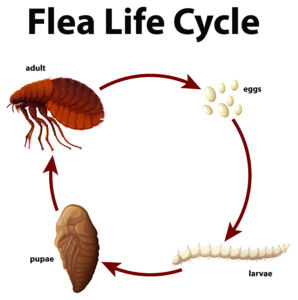
Eggs are tiny and white, oval-shaped, about the size of a grain of salt. Not sticky at all – actually the opposite, they’re designed to fall right off your pet’s fur. Which means within hours of being laid, they’re already scattered across your carpet, your couch, your bed, wherever your pet has been sitting.
A few days later, they hatch into larvae, which honestly look like little pale worms. No legs, just a squirmy little body with a darker line running through the middle – that’s the gut, visible right through the skin. They hate light, so they dig down into carpet fibers and cracks in the floor. This is the actual reason vacuuming alone doesn’t solve anything. You’re only ever getting the surface.
The pupal stage makes flea infestations difficult to eliminate. Flea pupae develop inside protective cocoons that collect dust and debris, making them hard to detect. They can remain dormant for weeks or even months until warmth, vibrations, or carbon dioxide signal that a host is nearby, causing fleas to reappear after treatment.
Signs of Fleas in House
Some of this shows up before you ever see a live flea crawling around.
Behavior changes first, usually. More scratching than normal, chewing near the tail, restlessness at night that wasn’t there before. Cats especially will over-groom to the point where you start noticing thin patches – easy to miss if you’re not really looking.
Then the physical stuff: small black specks along baseboards or in pet bedding, bites on your own ankles you can’t explain, and – this is the one that really gets people – something actually jumping when you cross the room. If you’ve hit that point, you’re past the early stage. Sorry.
Signs of Flea Infestation
Infestations build in a pretty predictable order once you know what to watch for.
At first, it’s subtle – a bite you blame on mosquitoes, nothing more. Then flea dirt shows up in your pet’s fur, and maybe you catch a live one on light-colored flooring if you’re paying attention. By the time it’s advanced, they’re on the furniture, in the carpet, jumping onto your socks while you’re just trying to sit and watch a show in peace.
A single female flea lays up to 50 eggs a day. Fifty. Per day. Do that math over two weeks, and it’s not hard to see how a “small” flea sighting can turn into an actual infestation faster than most people expect.
Signs of Fleas on Humans
Bites cluster low – ankles, lower legs – which makes sense once you remember that’s about as high as a flea can jump onto someone standing up.
They show up as small red bumps, itchy in a way that’s hard to ignore, usually in little clusters of two or three, sometimes almost in a line. A lot of them have a darker red center with a lighter ring around it, which is one way to tell them apart from a mosquito bite if you’re trying to play detective.
Flea saliva has proteins in it, and some people’s bodies overreact way more than others’. My sister barely notices getting bitten. I swell up as I got stung by something with a grudge. Scratching feels amazing for about two seconds and then makes everything worse – broken skin, possible infection, the whole unpleasant cycle. Speaking from experience here: don’t.
How to Get Rid of Fleas
Treat every pet in your household, even if they don’t show signs of fleas. If the infestation persists despite home treatment, professional flea pest control services can eliminate fleas at every stage of their life cycle. Because fleas can easily move between pets, treating only one animal may allow the infestation to continue. For the best results, use veterinarian-approved flea treatments recommended for your pet.
Wash pet bedding in hot water weekly if you can manage it. Vacuum everything – carpet, rugs, furniture – daily for at least two weeks, especially wherever your pet sleeps. If you have access to a steam cleaner, use it. It reaches eggs and larvae buried in carpet padding that a vacuum just skims right over.
How to Prevent Fleas from Returning
Year-round pet treatment through the warmer months makes the biggest difference by far. Using Pet-Friendly Pest Control solutions can help protect your pets while effectively managing flea infestations. In addition, keep your yard well maintained by mowing the lawn regularly and clearing shaded, damp areas where fleas are likely to thrive before making their way indoors on pets or clothing.
Beyond that it’s small stuff. Weekly bedding washes. A quick comb-through after your dog’s been at the park.
When Should You Call a Professional Pest Control Company?
If the pets are treated, the house is clean, and fleas are still turning up two or three weeks in, it’s time to contact best pest control company for a comprehensive inspection and treatment. Fleas hiding inside wall voids or buried deep in carpet padding are just not reachable with anything from a store shelf.
A licensed technician can hit every stage at once, eggs through adults, which usually cuts weeks off the whole miserable process compared to fighting it solo. Scheduling an inspection as soon as you notice persistent flea activity can help prevent the infestation from spreading throughout your home.
Fleas are small, but they’re stubborn, patient little survivors that know exactly how to hide. Once you actually know what one looks like – the shape, the size, the eggs you can barely spot without squinting – catching a problem early gets a lot easier. Treat the pets, clean like you mean it, and don’t wait too long to call for backup once it’s clearly bigger than a vacuum can handle.
Frequently Asked Questions
What does a flea look like to the human eye?
Tiny, reddish-brown, flattened, about the size of a poppy seed – and fast enough that you’ll probably lose track of it in a second.
How big are fleas compared to bed bugs?
Smaller and narrower. Bed bugs are flat too, but oval and roughly apple-seed sized, noticeably bigger than a flea.
What do cat fleas look like?
Basically identical to other flea species to the naked eye – reddish-brown, oval, flat. The real difference is a tiny comb of spines near the head that needs magnification to see.
Where are fleas on cats usually found?
Base of the tail, the belly, and behind the ears – the spots a cat can’t groom as easily on its own.
What are the first signs of fleas in the house?
A pet scratching more than usual, small black specks turning up on bedding, and bites on your ankles you can’t quite explain.
How do flea bites look on humans?
Small red bumps, itchy, often in clusters of two or three, sometimes with a darker spot in the center.
What are the common signs of fleas on humans?
Ankle bites, flea dirt on socks or furniture, and occasionally spotting a live flea on light flooring.
What are the most common fleas different types found in homes?
Cat fleas by a wide margin, even in homes without a single cat. Dog fleas show up occasionally, too.
What are the early signs of flea infestation?
More scratching from your pet, paired with flea dirt in the fur, before you see live fleas regularly.
Can you see flea eggs without a microscope?
Barely, and only if you’re really looking. They look like grains of salt and blend right in.
Do fleas live in carpets and furniture?
Yes – larvae in particular burrow deep into carpet fibers and cushions, away from light.
How can I permanently get rid of fleas in my home?
Treat every pet consistently, wash bedding in hot water, vacuum daily for a couple of weeks straight, and call a professional if fleas are still around after that.